Mainspring’s Executive Director Sharon Taylor was featured in a piece by Stephanie Carson on Public News Service on May 2, 2016. Listen to the radio piece here, or read the transcript below.
BRASSTOWN, N.C. – Farmers’ markets are in full swing across North Carolina, with tables full of locally-sourced produce, meats and crafts. In addition to water, sunshine and sweat equity to create the bounty of crops, land also is needed to meet the demand.
That’s what North Carolina’s land trusts bring to the table.

They secure agricultural easements on farmland to protect it from development, explains Sharon Taylor, executive director for the Mainspring Conservation Trust.
“What that allows in a lot of cases is for some families to hold on to their property long-term,” says Taylor. “It also allows for it to stay available for agriculture, which is important for the greater public because then, the property is available for growing our food.”
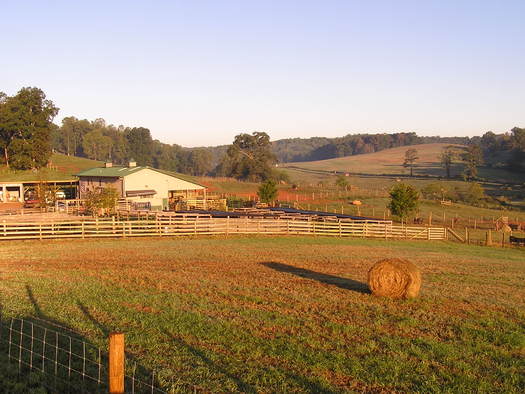
Mainspring holds the conservation easement for Ridgefield Farm, home of Brasstown Beef.
By definition, an agricultural land easement prevents land from being used or sold for non-agricultural purposes.
Taylor says farmers who might be interested can connect with the local land trust in their area through the group Blue Ridge Forever.
Hickory Nut Gap Farm outside of Asheville is protected by an easement with the Southern Appalachian Highlands Conservancy.
William Hamilton, farmland program director with the conservancy, says easements are important because farmland is often just as appealing to developers as it is to farmers.
“Our river bottoms and creek bottoms and our soils that we can actually grow food on are extremely limited,” says Hamilton. “They’re also the types of properties that are very often easiest to develop, because they’re flat; they’re usually right next to an existing road.”
Taylor says in addition to protecting the land, agricultural easements protect a food supply that’s becoming even more valuable as consumers demand to “buy local.”
“Conservation and farming go hand in hand, and so it’s really important, as more and more land gets developed, that some land is available to produce the food for the future generations,” she says. “We need to keep land available for that too, and particularly good, rich farmland.”
These easements receive funding in part from the North Carolina Agricultural Development and Farmland Preservation Trust Fund, and the USDA’s Agricultural Conservation Easement Program.